Reactive vs. Proactive: How to Extend the Life of Your Construction Tools
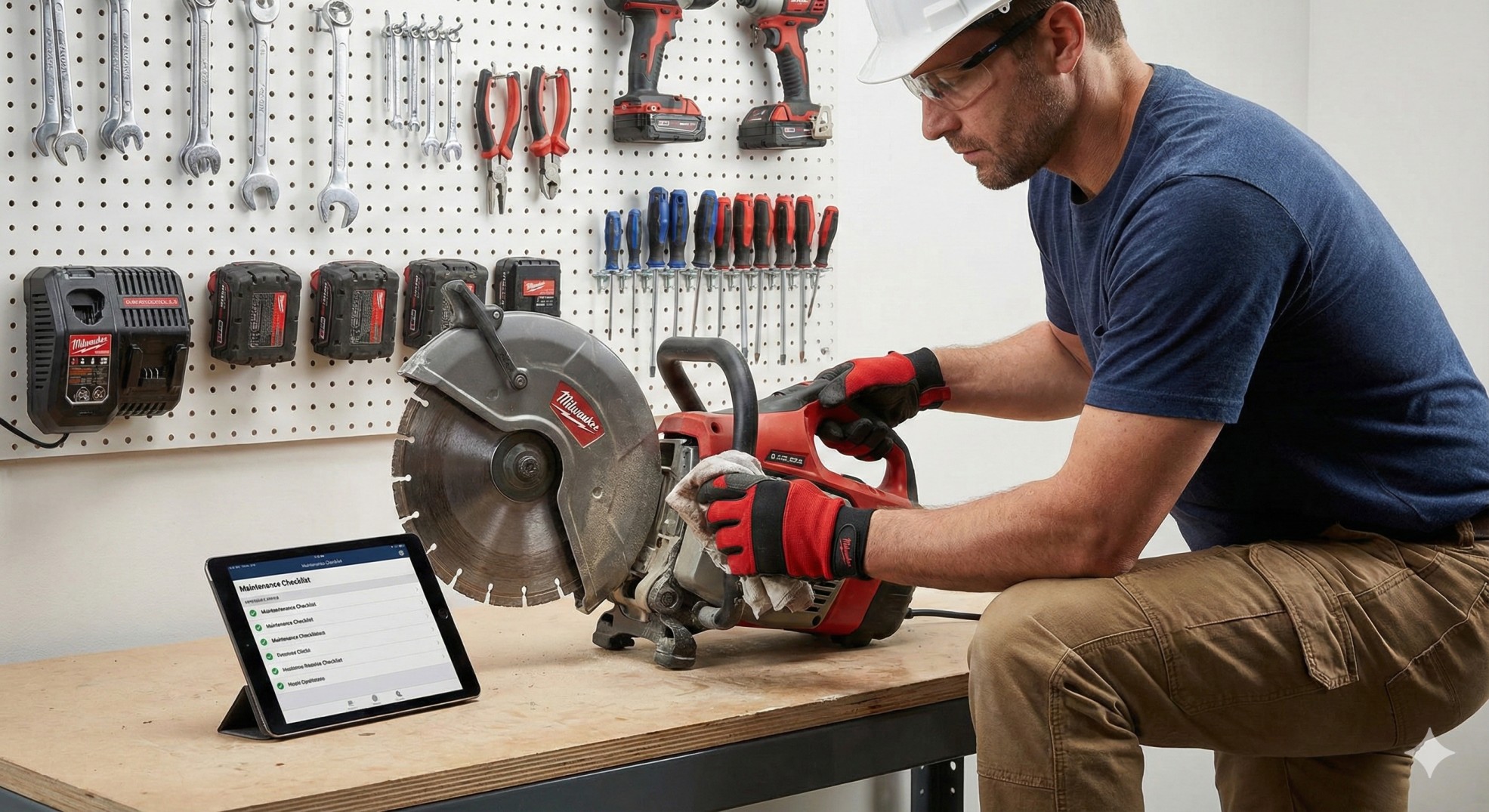
There is an old saying in the trades: "Take care of your tools, and they will take care of you."
Yet, on many busy job sites, tool maintenance often takes a backseat to deadlines. We run drills until they smoke, ignore frayed cords until they spark, and toss batteries into the truck bed without a second thought.
We have already discussed The Hidden Cost of Lost Tools, but a tool that breaks mid-shift can be just as expensive as one that goes missing. It halts production, forces emergency runs to the hardware store, and eats into your project margins.
Here is how to shift your business from reactive repairs to proactive maintenance.
1. Ditch the "Run-to-Failure" Mindset
The most expensive maintenance strategy is waiting for something to break. "Run-to-failure" might save time today, but it costs significantly more in the long run due to catastrophic failures and unplanned downtime.
Instead, adopt a Preventative Maintenance (PM) schedule. This means servicing equipment at regular intervals—whether based on calendar days or usage hours—before issues arise.
2. Automate Your Maintenance Schedule
If you are relying on sticky notes or a whiteboard to remember when the generator needs an oil change, you are setting yourself up for failure.
Many small businesses try to track calibration dates and service intervals on spreadsheets. However, as we highlighted in our comparison of Excel vs. Inventory Software, spreadsheets don’t send push notifications.
A dedicated inventory system can automatically alert you when a tool is due for service, ensuring you never miss a calibration date or a safety inspection.
3. Don't Forget PPE Expiration Dates
Maintenance isn't just for power tools and heavy machinery; it applies to safety gear, too. Personal Protective Equipment (PPE) has a shelf life.
-
Hard Hats: UV exposure degrades the plastic over time. (Check out our guide on Top 10 Safety Helmets to see modern replacement options).
-
First Aid: Medical supplies expire. Regularly audit your kits to ensure they are compliant. (See: How to Choose the Right First Aid Kit).
4. The "5-Minute" End-of-Day Rule
Implement a strict rule for your crew: The last 5 minutes of the shift are for cleaning, not just packing.
-
Corded Tools: Wipe down casings to remove drywall dust and check power cords for nicks.
-
Pneumatic Tools: Apply a drop of oil to the air inlet (if required) to prevent internal rust.
-
Batteries: Ensure batteries are charged and stored in a temperature-controlled environment, not left to freeze in the van overnight.
5. Train Your Team to Spot "Pre-Failure" Signs
Your workers are the first line of defense. Train them to report small issues immediately, rather than "making it work."
-
Is the drill emitting a burning smell?
-
Is the circular saw vibrating more than usual?
-
Is the safety guard on the grinder sticking?
Catching these issues early—and logging them in your inventory system—can turn a $200 replacement into a $20 repair.
Conclusion
A robust inventory isn't just about counting what you have; it's about ensuring what you have actually works. By combining a digital tracking system with a proactive maintenance culture, you will maximize the ROI on every piece of equipment you own.
Ready to get your maintenance schedule under control? Check out our latest tools for tracking service intervals and asset history.